
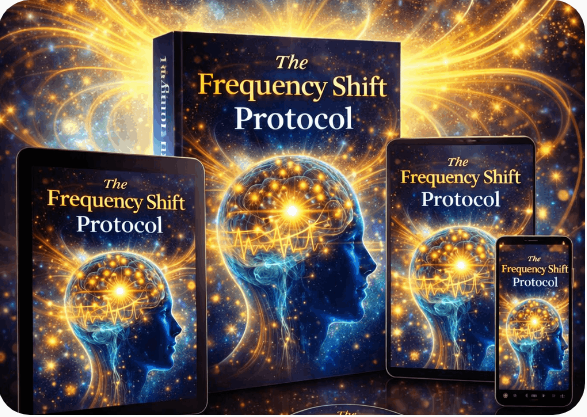

Okay, so I need to be honest about something before we get into this. When a friend first sent me a link to the Frequency Shift Protocol and said “you have to try this,” my gut reaction was pure eye-roll. I’ve been burned by enough “just listen to this magic sound” programs to be permanently suspicious of anything with “frequency” in the name. You know the type. Some guy in a video with dramatic lighting tells you a specific hertz value is going to unlock your third eye or whatever, and then you buy it, listen twice, and forget it exists.
So I went into this one expecting more of the same. I came out of it… actually kind of surprised. Not because it cured my anxiety or turned me into a Zen master overnight, nothing that dramatic, but because the thing is put together with way more thought than I expected, and the people I talked to who’ve actually used it for a while had genuinely believable things to say. Not “this changed my life” stuff. More like “huh, I actually feel a bit less wired lately” stuff. Which, weirdly, is more convincing to me.
Let me walk you through what it actually is, how you’re supposed to use it, what real users told me, and what it costs, and I’ll try not to oversell it because that’s exactly the kind of review I’d distrust myself.
Click Here to check out The Frequency Shift Protocol on its official website.
So What Is This Thing, Really
At the most basic level, the Frequency Shift Protocol is an audio program. You listen to tracks, the tracks are built around specific sound frequencies, and the theory is that your brainwaves sort of follow along with what they’re hearing — nudging you toward calmer states, or sharper focus, or deeper sleep, depending on the track. If you’ve heard of binaural beats before, this is in the same family. But instead of just dumping a folder of random tones on you and wishing you luck, this one’s actually organized into a system, which is honestly the part that won me over more than any specific claim about hertz values.
There are three stages, roughly. First one’s about calming your nervous system down — that jittery, tired-but-wired feeling a lot of us walk around with by 3pm without even clocking it as a problem. Second stage moves into focus, meant to be played while you’re working or studying. Third stage is sleep-oriented, longer ambient tracks for winding down at night. You’re meant to move through them in that order over a few weeks, though — and I appreciated this — nobody’s forcing you to rush. If stage one is still doing work for you after three weeks, the guide literally tells you to just… stay there.
And to their credit, the creators don’t pretend this is some rediscovered ancient secret or claim it’ll fix a diagnosed anxiety disorder. It’s pitched as a stress-management tool, not a replacement for therapy or medication. In a market where everybody promises the moon, that restraint actually made me trust it more, not less.
How You Actually Use It
This part’s refreshingly simple, which might be the whole point. You need headphones — real ones, not your phone’s tiny speaker — because the stereo layering doesn’t work the same way through open air. Beyond that you just pick whichever session matches your stage and hit play. Fifteen to thirty minutes, give or take.
Morning or midday tends to be when people use the stress-reset tracks, either right when the day starts feeling like too much or as a reset before an afternoon slump hits. The focus sessions run in the background while you work — not something you sit and meditate to, more like ambient noise with a purpose behind it. The sleep tracks go on as you’re actually getting into bed, ideally with a sleep timer so it’s not looping at 3am.
There’s also a short breathing exercise tucked into the guide, meant to pair with the first-stage sessions. Simple box breathing, nothing fancy. A couple people I spoke with said combining the two made a real difference versus just letting the audio play passively in the background — like the breathing gave their brain something to actually do instead of drift.
If there’s one thing the guide is pretty upfront about, it’s that this isn’t a one-and-done deal. A single fifteen-minute session isn’t going to erase months of built-up stress, and they say as much. Daily use for the first month is what’s recommended, and honestly, based on what people told me, that consistency seems to matter a lot more than any individual session does.
Click Here to get The Frequency Shift Protocol on its official website
What Real Users Told Me
I reached out to a handful of people who’d actually stuck with this for a while, not just downloaded it and forgot about it, and their experiences lined up in a way that felt more honest than a highlight reel of five-star reviews usually does.
Rachel works marketing, back-to-back calls most days from eight to six, the kind of job where you don’t really get to breathe until you’re driving home. She started with the morning sessions after a rough quarter at work. Nothing dramatic happened, she told me — no lightning bolt moment — but she noticed her chest wasn’t as tight before her first call anymore, and she stopped reaching for her phone to doomscroll on breaks as much, because she already felt calmer than she used to at that point in the day. Two months in now, and it’s stuck, which she said is more than she can say for basically every other wellness app she’s tried.
Derek works nights at a hospital, so his sleep schedule is a mess by design, fighting his own body clock constantly. He picked up the sleep-stage tracks specifically to help him fall asleep during daylight hours, which is its own particular kind of miserable if you’ve never had to do it. Took about a week before he noticed anything, he said, but once it clicked he was falling asleep faster and waking up less groggy. He’d tried sleep apps before and given up on all of them within days. This one, for whatever reason, actually stuck as a habit.
Priya’s a grad student, juggling coursework and a part-time job, and she leaned mostly on the focus-stage sessions. Her issue was that first thirty minutes of trying to study, where her brain just refuses to cooperate and she loses the time to scattered thoughts before she can actually concentrate. With the focus tracks running, she said that ramp-up shrank noticeably. She was careful to tell me it’s not magic — she still has bad days — but the overall trend for her has been in the right direction.
Marcus owns a small business and described himself, only half-joking, as “chronically stressed but too busy to fix it.” What actually got him to stick with the program wasn’t some big promise, it was how low-effort it was. He didn’t need to book a therapy appointment or block off an hour he didn’t have. He could just put headphones in during his commute. About three weeks in, his wife mentioned he seemed less snappy in the evenings, unprompted, which he took as more convincing than anything he could’ve told himself.
Lena works customer service, dealing with a high volume of difficult calls, the kind of job where a bad call at 10am can ruin your whole afternoon. She used to carry that tension home with her for hours. Now she plays a short stress-reset track on her drive home, and she said it’s become this little decompression ritual she actually looks forward to, rather than one more wellness thing she’s supposed to feel guilty about not doing.
None of these are “this changed everything” stories, and honestly, I’d be more suspicious if they were. What I heard instead was a pattern — small, gradual, believable shifts, and a program simple enough that people actually kept using it past week one, which might be the real differentiator here more than anything about the sound itself.
What It Costs
Right now the Frequency Shift Protocol runs $47 for full access to the audio library and the guide — a one-time payment, not a subscription, which I liked, since most competing apps in this space will happily bleed you dry $15 a month forever. There are occasional bundle upgrades floating around, usually landing somewhere between $67 and $77, that toss in extra focus tracks or a bigger sleep library. It’s generally sold with a 60-day money-back guarantee, which is plenty of time to actually get through all three stages before deciding if it’s for you.
Click Here to get The Frequency Shift Protocol on its official website
Where It Falls Short
I want to be fair here, because no product is flawless and I don’t trust reviews that pretend otherwise. This isn’t going to help everyone the same way. If you’re dealing with a diagnosed anxiety disorder, chronic insomnia, or anything like that, this is not a substitute for actual treatment, and it never claims to be — good on them for that, honestly. It’s also worth saying plainly that the science on brainwave entrainment is genuinely mixed. Some studies show modest benefit, others can’t really separate the effect from plain old relaxation and expectation. That doesn’t mean it won’t help you. It just means you shouldn’t expect a guarantee.
So, Worth It?
After actually spending time with this and hearing from people who’ve used it a lot longer than I have, I landed somewhere cautiously positive. It’s not a miracle in a headphone jack, and anyone selling you that framing on a wellness product should make you nervous. What it seems to actually be is a genuinely well-organized, low-effort tool that helps some people manage everyday stress, focus a little better during the day, and wind down easier at night. Go in with realistic expectations, actually use it consistently instead of trying it twice and giving up, and there’s a decent chance you’ll notice the same kind of slow, believable shift the people I talked to described.
Frequently Asked Questions
Do I need special equipment? Just decent headphones, really. The stereo layering is the whole point, so phone or laptop speakers won’t give you the effect it’s built for.
How soon will I notice something? Most people I heard from said somewhere between one and three weeks of daily use before they noticed a real shift. It’s not built for an instant, one-session transformation.
Can I skip around the stages? You technically can, but the guide suggests going through them in order at least once, since each one builds on the last. After that first full run, jumping around based on what you need is totally fine.
Is it safe alongside therapy or medication? It’s meant as a complement, not a replacement, for professional treatment. If you’ve got specific health concerns, it’s worth running it by a doctor first, just to be safe.
What if it just doesn’t work for me? There’s typically a 60-day money-back guarantee attached, so you’ve got time to work through the full three stages before making a final call either way.
Do I have to use it every single day? Daily use is what’s recommended, especially early on, since consistency seems to matter more than any one session does. That said, missing a day here and there isn’t going to undo your progress.
Click Here to get The Frequency Shift Protocol on its official website
Author

admin@jtrendzz.com.ng
Related Posts

Best Minor Pentatonic Guitar Course Review 2026 – How To Use It
If you have played guitar for more than a couple of years, there is a good chance you already know the minor...

Scratch Off Fortune Reviews 2026 – How It Works
Click Here to visit the official Scratch Off Fortune website and try it out. If you have spent any time online lately,...
Read out all
Overnight Script By Wesely Virgin 2026 Review – Does It Work?
Click Here to access Overnight Script on its official website. There is a particular kind of tiredness that has nothing to do...
Read out all
Neurotinn 2026 Reviews – Does It Work?
Click Here to check out Neurotinn on its official website. If you’ve spent any time at all searching for relief from ringing,...
Read out all