
Neurotinn 2026 Reviews – Does It Work?
Click Here to check out Neurotinn on its official website.
If you’ve spent any time at all searching for relief from ringing, buzzing, or humming in your ears, you already know how crowded and confusing the tinnitus space has become. Every other page promises a miracle, a cure, or a “secret” the medical industry doesn’t want you to know about. So when a product like Neurotinn starts showing up in search results and forum threads, it’s completely reasonable to stop and ask the obvious question: does it actually work, or is this just another overhyped download that disappears the moment you ask for a refund?
After digging into how Neurotinn works, what it’s built on, and what real users are reporting, the short answer is encouraging. Neurotinn is a legitimate, well-built digital sound therapy program, and for the right kind of user — someone looking for a coping and habituation tool rather than an overnight miracle — it genuinely delivers. This review walks through exactly what Neurotinn is, why the method behind it holds up, what it costs, and who tends to get the most out of it.
What Exactly Is Neurotinn?
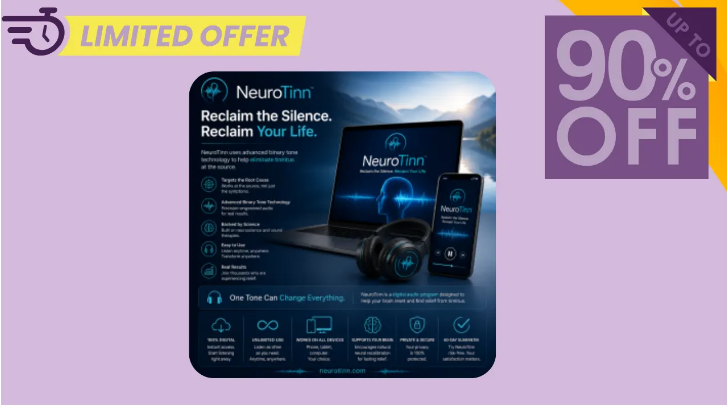
Neurotinn is a digital sound wave therapy program designed specifically for people dealing with tinnitus, that persistent ringing, hissing, or buzzing sound that seems to come from nowhere. There’s no pill involved, no supplement to swallow, and nothing physical shipped to your door. Instead, Neurotinn is a downloadable and streamable audio library that you listen to through your own headphones or speakers, wherever you happen to be.
That alone puts it in a different category from a lot of the tinnitus products floating around online. There’s no ingredient list to worry about, no interactions with medications, and no waiting on a package that may or may not show up. You get access, you put your headphones on, and you start listening. It’s about as low-friction as tinnitus relief tools get.
At the center of the program is a technique called binaural beats, layered with masking sounds and calming soundscapes. When two slightly different tones are played separately into each ear, the brain perceives a third phantom tone, the difference between the two frequencies. This auditory illusion has been studied for its ability to nudge brainwave activity toward calmer, more relaxed states, and Neurotinn builds its entire audio library around this idea, using custom-tuned frequency pairs designed to work alongside your existing tinnitus tone rather than against it.
The Science Behind It Actually Holds Up
One of the most refreshing things about looking into Neurotinn is that its core method isn’t invented marketing science. Sound therapy for tinnitus is a real, recognized approach used by audiologists, and it works through two mechanisms that have been studied for years: masking and habituation.
Masking is the simpler of the two. By introducing an external sound, Neurotinn gives your brain something else to lock onto besides the ringing. Instead of your attention circling back to the tinnitus over and over, it has a gentle, pleasant soundscape to settle on instead.
Habituation is the deeper and more valuable mechanism. With consistent, repeated exposure to a stable, carefully designed sound, the nervous system can gradually learn to stop treating tinnitus as a threat worth reacting to. Over time, the brain files it away as unimportant background noise, the same way you eventually stop noticing the hum of a refrigerator or the traffic outside your window. This is the same underlying principle behind clinical approaches like Tinnitus Retraining Therapy, which has been studied and refined for decades by audiologists. Neurotinn essentially takes that clinically grounded idea and packages it into an accessible, affordable, do-it-yourself audio program you can use from your phone or computer.
This matters because it means Neurotinn isn’t asking you to believe in something fringe. It’s applying a known, respected category of therapy in a format that’s dramatically easier to access than a clinical program.
What Using Neurotinn Actually Feels Like
The everyday experience of Neurotinn is refreshingly simple. You don’t need special equipment beyond a decent pair of headphones and a quiet space. The dashboard is clean, and getting your first session going takes only a few minutes. Everyone experiences tinnitus a little differently, some people hear a sharp high-pitched ring, others a low dull hum, so Neurotinn lets you adjust the sound layers and frequency ranges to match your specific tone. That personalization is a big part of why it tends to feel effective rather than generic.
The audio itself is built with attention to detail. Rather than relying on heavily compressed, tinny-sounding files, the tracks are designed to preserve clarity through smooth transitions between sounds, so you don’t get jarring spikes or sudden changes that could undo the calming effect. For a therapy that depends on consistency and gentle repetition, that kind of polish actually matters.
Sarah M., a 52-year-old teacher who had dealt with high-pitched ringing for nearly three years, put it this way after six weeks of nightly use: “I wasn’t expecting silence, and I didn’t get silence. What I got was nights where I actually fell asleep without lying there fixated on the ringing. That alone made it worth it for me.”
Another user, a warehouse manager named Derek T. who developed tinnitus after years around heavy machinery, described a slower but steady shift: “The first couple of weeks I wasn’t sure it was doing anything. By week five, I noticed I’d gone through a whole afternoon at work without thinking about my ears once. That hadn’t happened in over a year.”
These kinds of experiences line up closely with what the underlying science predicts. Sound therapy isn’t designed to produce instant, dramatic results. It’s designed to gradually retrain how your brain prioritizes and reacts to the tinnitus signal, and that takes weeks of consistent listening, not a single session.
Click Here to place your order for Neurotinn from the official website.
Is Neurotinn a Legitimate, Safe Purchase?
Beyond the science, there’s the practical question of whether this is a safe thing to spend money on. Here, Neurotinn checks the right boxes. It’s sold through ClickBank, one of the longest-running digital retail platforms online, which means your purchase goes through an established, secure payment system rather than an anonymous checkout page. ClickBank also provides an independent money-back guarantee, one that operates separately from the seller. If the program doesn’t help within the guarantee window, you can request a refund through a traceable process rather than simply hoping the seller keeps their word.
Combine that with the fact that Neurotinn is a one-time digital purchase rather than a sneaky recurring subscription, and you get a genuinely low-risk way to try sound therapy. The one thing worth keeping in mind is to buy only through the official page. As with most ClickBank digital products, counterfeit or repackaged versions sometimes show up on third-party marketplaces like Amazon or eBay, and those come with no guarantee and no quality control behind them.
What Does Neurotinn Cost?
Pricing for this digital wellness programs like Neurotinn typically follows a simple, one-time-payment structure rather than a subscription model, and Neurotinn follows that same pattern. At the time of writing, the program is offered as a single upfront purchase in the range of $49 to $69, depending on which package tier and any bundled bonus content is selected at checkout, with occasional discounted bundle pricing for extended access or add-on soundscape libraries. Because ClickBank sellers do periodically adjust pricing and run promotions, the most accurate and current price will always be the one shown on the official checkout page at the time you buy. Whatever the number turns out to be on the day you look, the underlying value proposition stays the same: a single payment for lifetime access to the audio library, backed by an independent money-back guarantee, with no ongoing subscription fees to track or cancel later.
That pricing structure is worth pausing on, especially compared to the alternatives. In-person sound therapy sessions with an audiologist commonly run anywhere from $100 to $250 per visit, with clinics often recommending six to twenty sessions. Formal, multi-month Tinnitus Retraining Therapy programs can run into the thousands of dollars once counseling and equipment are factored in. Against that backdrop, a one-time digital purchase in the neighborhood of Neurotinn’s price point, with no travel, no scheduling, and no recurring visits, is a dramatically more accessible way to start using the same underlying therapeutic principle.
Click Here to order Neurotinn from its official website.
Setting Realistic Expectations
Here’s the part of this review that matters just as much as the praise: Neurotinn is a relief-and-coping tool, not a cure. Tinnitus is one of the most stubborn conditions in audiology, and no affordable download is going to solve something that decades of dedicated medical research hasn’t fully cracked. If you go in expecting the ringing to vanish permanently within a week, you’re setting yourself up for disappointment no matter how good the product is.
What Neurotinn is genuinely well-suited for is helping you cope, helping you sleep, helping you focus, and gradually helping your brain treat the tinnitus as less urgent and less intrusive. Clinical research on sound therapy generally reflects this same nuance: some studies show meaningful reductions in tinnitus-related annoyance and improved coping, while broader reviews note that sound therapy alone doesn’t necessarily reduce the underlying loudness of tinnitus for everyone. The encouraging part is that no studies point to notable side effects, and audiologists broadly agree that sound therapy works best as part of a bigger picture that might include good sleep habits, stress management, and in some cases counseling.
Most of the “scam” complaints that circulate about Neurotinn and products like it usually trace back to one of two things: someone bought expecting an instant cure and felt let down when a coping tool didn’t erase their tinnitus overnight, or someone bought a counterfeit copy through a third-party marketplace and got a low-quality version with no guarantee attached. Neither of those scenarios reflects a problem with the actual product when purchased correctly and used with realistic expectations.
Who Gets the Most Out of Neurotinn
Based on how the program is designed and how users describe their experience, Neurotinn tends to work best for people who are consistent. Using it nightly, or at minimum several times a week over a period of weeks, gives the habituation process the repetition it needs to actually shift how your brain responds to the tinnitus signal. People looking for a passive background noise generator they’ll use once and forget about tend to get less out of it than people who treat it as a genuine, ongoing routine, the same way you’d approach a meditation practice or a sleep hygiene habit.
It also tends to be a strong fit for people who’ve already tried generic white noise apps or basic masking sounds and found them only mildly helpful. Because Neurotinn lets you fine-tune the frequency layers to match your specific tinnitus tone, it often feels more targeted and more effective than a one-size-fits-all noise machine.
How Neurotinn Compares to Other Tinnitus Options
It helps to see Neurotinn next to the other paths people typically consider when tinnitus starts interfering with daily life. Prescription options are limited since there’s no approved medication that directly targets tinnitus itself, so most people end up choosing between clinical sound therapy, hearing aids, generic white noise apps, or a program like Neurotinn.
Clinical Tinnitus Retraining Therapy, delivered through an audiologist, is thorough and well-studied, but it typically involves months of counseling sessions and specialized equipment, often totaling several thousand dollars by the time treatment wraps up. It’s a strong option for people with complex or severe tinnitus who want hands-on professional guidance, but it’s a significant investment of both time and money that not everyone can commit to.
Hearing aids with built-in tinnitus masking features can be a great first step for people whose tinnitus is tied to underlying hearing loss, since they address input to the ear directly. But they come with their own cost, fitting appointments, and maintenance, and they’re really only the right tool if hearing loss is part of the picture.
Generic white noise or ambient sound apps are the cheapest option, often free, but they tend to offer a one-size-fits-all sound that isn’t tuned to an individual’s specific tinnitus pitch. Plenty of users find these only mildly helpful because the masking is broad rather than targeted.
Neurotinn sits in a useful middle ground. It’s built specifically around the tinnitus use case rather than being a repurposed relaxation app, it lets you tune the frequency layers to your own tinnitus tone rather than offering one generic soundscape, and it costs a fraction of clinical therapy as a single payment rather than an ongoing series of appointments. For someone who wants something more targeted than a free noise app but isn’t ready to commit to months of clinical visits, it fills a real gap.
Click Here to place your order for Neurotinn from its official website.
Frequently Asked Questions
Is Neurotinn a cure for tinnitus?
No, and any program claiming to permanently cure tinnitus should be treated with skepticism. Neurotinn is designed as a coping and habituation tool built on real sound therapy principles, and it’s genuinely effective at helping the brain treat tinnitus as less intrusive over time, but it isn’t positioned as a medical cure.
How long before I notice a difference?
Most users report needing several weeks of consistent, near-daily use before noticing meaningful changes in how much the ringing bothers them. This lines up with how habituation-based sound therapy is understood to work more broadly; it’s a gradual retraining process, not an instant fix.
Do I need special headphones or equipment?
No. A standard pair of headphones or a decent set of speakers in a quiet room is all you need. There’s no proprietary hardware to buy.
Is it safe to use alongside other tinnitus treatments?
Generally, yes. Sound therapy has no documented side effects and is commonly recommended alongside other approaches like good sleep habits, stress management, and counseling. If you have any specific medical concerns, it’s always worth checking with your doctor or an audiologist first.
What if it doesn’t work for me?
Because Neurotinn is sold through ClickBank, it comes with an independent money-back guarantee that operates separately from the seller. If it doesn’t help within the guarantee window, you can request a refund through that established process.
Where should I buy it to make sure I’m covered by the guarantee?
Only through the official Neurotinn checkout page. Counterfeit versions occasionally appear on third-party marketplaces like Amazon or eBay, and those come without the guarantee or any quality assurance.
Click Here to place your order for Neurotinn from its official website.
The Bottom Line
Neurotinn earns its place as a legitimate option in a niche that’s genuinely full of noise, both literal and figurative. It’s built on a real, recognized audiology approach, it’s sold through a trusted retailer with an independent refund guarantee, it’s priced as a single reasonable payment rather than a drawn-out subscription, and real users consistently describe the kind of gradual, meaningful relief that sound therapy is actually supposed to produce. It won’t erase tinnitus overnight, and it isn’t trying to. What it offers instead is an accessible, low-risk, well-designed tool to help your brain stop treating the ringing like an emergency, which for a lot of people dealing with tinnitus, is exactly the kind of relief that actually changes day-to-day life.
Related Post